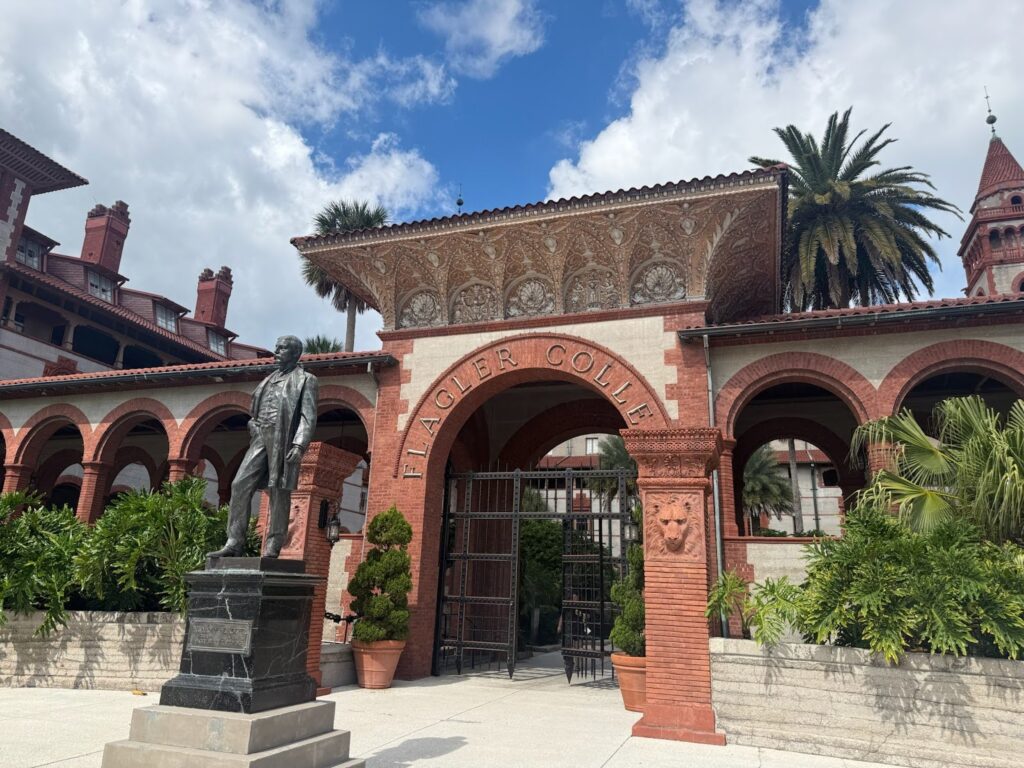
On the upper northeast coast of Florida, deep in the heart of St. Augustine sits the Hotel Ponce De León. Built by Gilded Age industrialist Henry Morrison Flagler in 1888, the building was intended to be a luxury resort right on the east Florida coastline. Its hotel days, however, ended long ago, and the beautiful building now serves as the keystone building on the campus of Flagler College.
My friends and I had the privilege of visiting this campus on our Fall break trip to St. Augustine, familiarizing ourselves with the many fun facts the area has to offer. For example, the former Hotel-Ponce-De-León-turned-hotel features Spanish architecture and is now considered a National Historic Landmark at Flagler College.
The college itself is home to a student population of a little lower than 2,500 total undergraduates, much similar to our own college we were escaping that week. While we were on break, the Flagler students were still in school, and we delighted in seeing fellow students our age mill about outside of the 19th century buildings, and roam pathways the snake through tall palm trees and grassy flat landings.
As we explored, we turned left to Proctor library, which we found was not open to visitors. But upon befriending a student in the area, we gained an exclusive look inside. We found it to be filled with wooden inlays, green and white tiled flooring, and multiple floors stacked with books and resources alike.
Not wishing to overstay our welcome, we stepped back outside, but not before snagging a free book from a box labeled “Please take, free to go”

Exiting Proctor library, we encountered a bundle of hammocks strung in the palms, where students were seen reading their books just acquired inside of the library.
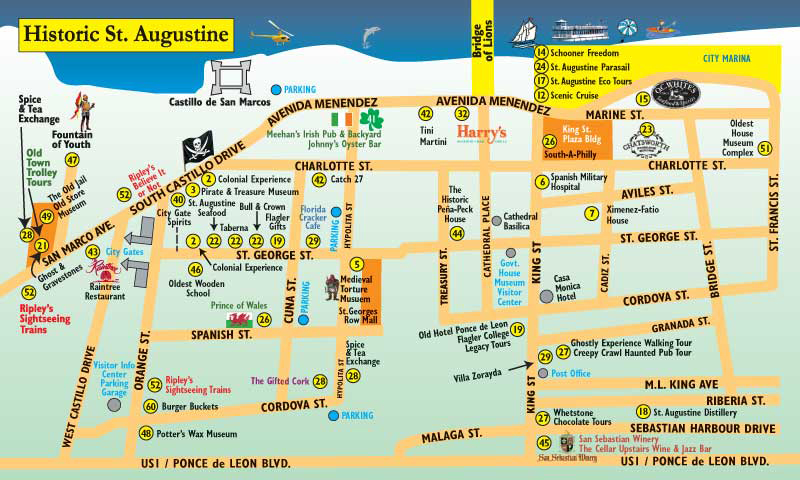
Walking out of the Flagler college gates leads you to downtown St. Augustine, which is considered to be the ‘Nation’s Oldest City’ Founded in September of 1565, the town features European and Spanish charm, drawing in tourists and locals alike. Walking through the gates of downtown, you are met with various smells of foods from vendor shops and carts. Ghost tour buses circle the outskirts, telling the local legends of the area to fascinated listeners and skeptics.
The Bridge of Lions sits just off of the downtown shops, connecting the mainland to Anastasia Island, and featuring marble carved Medici lions guarding either end of the bridge. Once on the island side, the St. Augustine Lighthouse can be seen, red and white stripes peeking over the trees and houses.
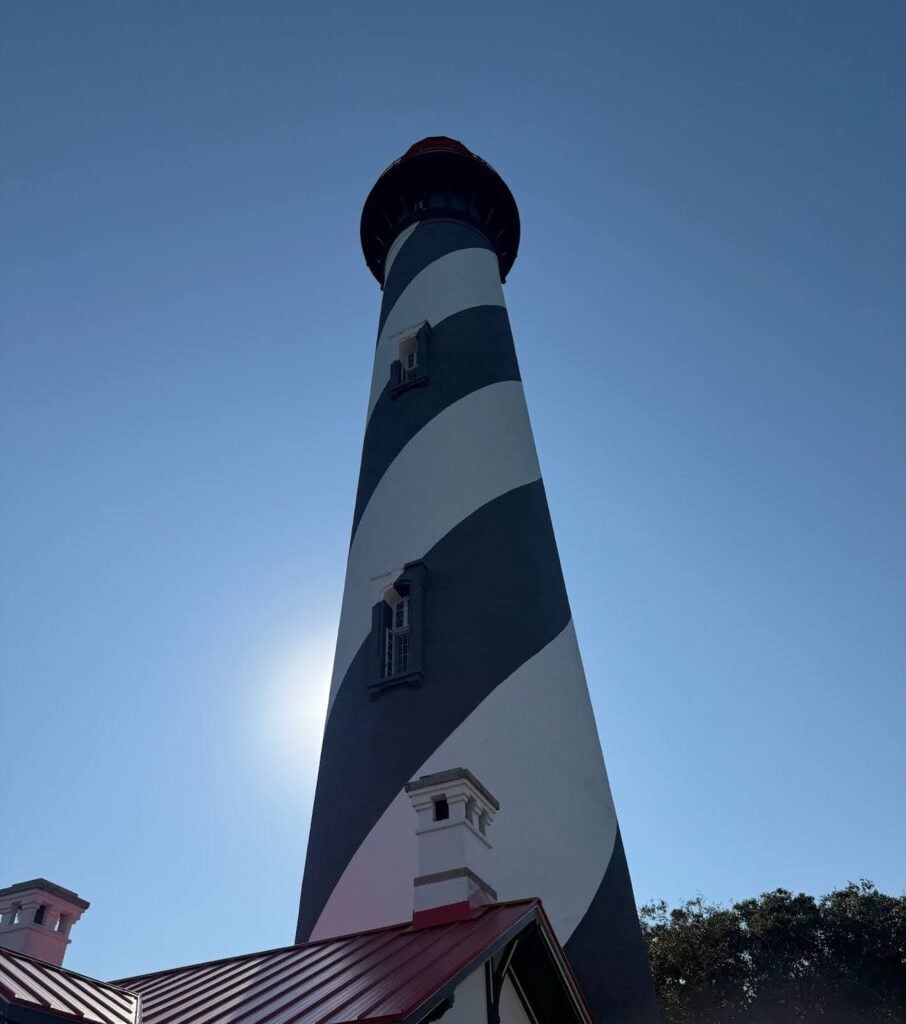
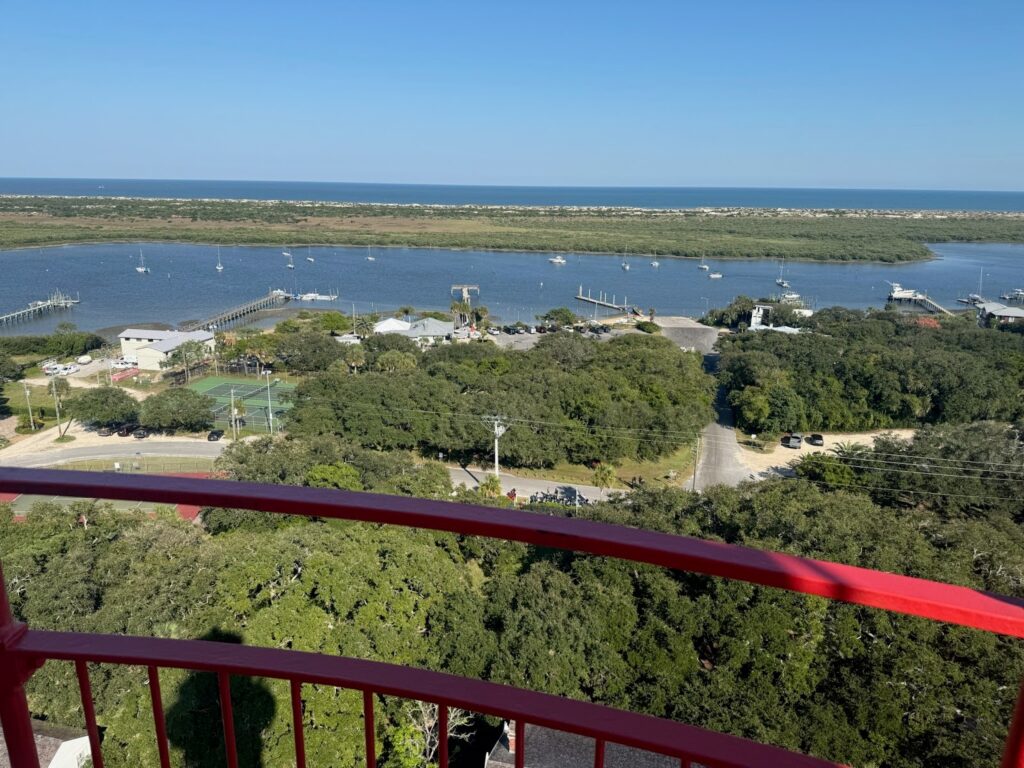
We attempted to climb the 219 steps to the top of the lighthouse, but this proved no easy feat. 165 feet up in the air, however, we took in the sights of the city from afar, reflecting on our explorations for the day. Experiencing a space with that many centuries of history felt healing in a way, and was a welcome departure from our traditional school day routines.